
Injury and post-surgery rehabilitation in Zaporizhzhia
Rehab Place is an outpatient physical therapy office in Zaporizhzhia, Ukraine. We help people regain movement after fractures, joint replacement, ligament tears and joint surgery. Sessions are one-on-one with a physical therapist in practice since 2012, and the first consultation takes about 60 minutes: conversation, assessment and testing, a recovery plan and your first exercises.
The most common story sounds like this: the cast is off or the incision has healed, but the arm or leg "won't obey" — the joint is stiff, the muscles have weakened, and putting weight on it feels frightening. Below: why every programme is agreed with your surgeon, what we work with, and when to call a doctor instead of coming to a session.
The information on this page does not replace a doctor's consultation. A physical therapist does not diagnose and does not prescribe treatment.
Rehabilitation is agreed with your surgeon
This is the single most important thing to understand about recovery after an operation. The key decisions belong to the person who performed it: when fixation comes off, when weight-bearing is allowed, how much range of motion is safe at this stage, and whether there are limits on load or amplitude. Those decisions rest on what the surgeon saw during the procedure, and no outside assessment replaces them.
The physical therapist's part is movement. They do not override or change the surgeon's instructions, do not "speed up" stages, and do not rewrite the discharge summary. Their job is to fill the permitted corridor with content: restore range of motion, strength and control within the limits that are already open, and prepare you for the next stage once the doctor allows it.
That is why we ask you to bring the discharge summary, imaging and any written instructions to the consultation. If there are no documents, or they do not answer a question that matters, we will say so plainly and ask you to check with the doctor before adding load. This is not a formality: the same operation by name can carry different restrictions for different people.
If your surgeon has restricted something specific — weight-bearing, flexion, rotation, load — tell us at the first meeting. The programme is built around those restrictions, not against them.
For relatives arranging care from abroad: a discharge summary and imaging sent ahead do not replace the in-person assessment, but they do make the first visit far more useful.
What we work with
- recovery after an arm or leg fracture, once the cast or fixator has been removed;
- rehabilitation after hip or knee replacement;
- recovery after ligament tears and joint surgery — knee, shoulder, ankle;
- restoring joint motion after surgery or a long period of immobilisation;
- contractures, swelling and muscle weakness following immobilisation;
- recovery after amputation, including preparing the residual limb for a prosthesis;
- altered gait or unsteadiness on stairs after an injury;
- fear of loading the limb that persists even after the tissues have healed.
Recovery after a fracture
Once the cast comes off, the picture is usually similar: the joint is stiff, the surrounding muscles have weakened, and the limb "fears" weight. That is an expected consequence of immobilisation, not a sign that something went wrong.
We start with an assessment: how much pain-free motion is available now, how the swelling behaves, how weak the muscles are, and how you tolerate weight. From there we gradually restore mobility, then strength, then weight-bearing and everyday skills — walking without crutches, stairs, fine hand movements, depending on what was broken.
The pace is set by how the tissues respond and by the limits your doctor has allowed, not by the calendar. Between visits you do the home part of the programme.
What a cast does to a limb, how recovery is staged and why swelling lingers — more on recovery after a fracture.
Rehabilitation after joint replacement
After a hip or knee replacement, the main task is learning to use the new joint correctly in daily life: standing up and sitting down, walking, going up and down stairs, turning over in bed. Alongside that we work on the strength of the muscles around the implant, on gait and on balance.
Restrictions after joint replacement differ from person to person: they depend on the type of implant, the surgical approach, the condition of the bone and the surgeon's decision. So the programme is built from your discharge summary and what the assessment shows, not from a generic scheme found online. If the summary names forbidden positions, they stay forbidden in our sessions too.
The stages, why the operating surgeon sets the protocol, daily life and the warning signs — more on recovery after joint replacement.
After ligament tears and joint surgery
Here the joint needs both motion and stability back. First we restore pain-free range and teach the muscles to switch on at the right moment; then come strength and control; and only after that, loads close to sport or physical work.
Returning to running, jumping or heavy labour is a separate decision. It is made on how the limb handles loaded testing and in line with your surgeon's position — not by a date on the calendar.
Where it helps, we support the area between sessions with kinesio taping as an auxiliary tool rather than a replacement for exercise. Soft-tissue techniques and massage are used to release tension and prepare the tissues for work.
Restoring joint motion after surgery: what it actually looks like
In everyday language, "getting the joint moving again" often sounds like "endure it and push harder". In a session it looks different.
We work within the limits allowed by the state of the tissues and by the doctor's instructions, combining range-of-motion work, the muscles around the joint and gradual loading. Mild discomfort during exercise is possible; sharp pain should not happen. If a movement produces sharp pain, we change the exercise or reduce the load rather than forcing it through.
Forcing range through pain, at the hands of someone untrained, is not physical therapy. If range does not change despite consistent work, that is a reason to go back to the surgeon, not to push harder.
The general principles of working with movement are set out on the physical therapy (exercise therapy) page.
Amputation and preparing the residual limb for a prosthesis
We work with people after amputation, including at the stage of preparing the residual limb for a prosthesis. This is a distinct area of work: caring for the limb within the doctor's instructions, maintaining mobility in the neighbouring joints and preventing contractures, building strength in the remaining limb and the trunk, and rebuilding balance and transfer skills.
Choosing a prosthesis, deciding when fitting can happen, and the medical management of the residual limb are matters for the doctor and the prosthetics provider. Our part is the movement preparation and learning to use the body in a new situation.
If the injury is service-related, the details on format and the discount are on the rehabilitation for military personnel and veterans page.
When you need a doctor, not a session
Physical therapy works with the consequences of an injury or an operation; it does not replace the surgeon's follow-up. Contact a doctor without waiting for your next session if you notice:
- increasing swelling, redness or a sensation of heat around the surgical site;
- discharge from the wound, separation of the incision, or fever;
- sharp pain that appeared suddenly and does not settle at rest;
- a feeling of instability, giving way, or clicking that was not there before;
- numbness, increasing weakness, or a change in the colour of the limb;
- pain, swelling or tenderness in the calf — particularly after a long period of immobility.
If we see any of this during a session, we stop the loading and refer you to a doctor.
How the sessions work
We begin with an assessment: range of motion, strength, swelling, gait, balance, and how you perform the everyday movements you actually need. That sets the starting level of the programme.
From there the load increases in small steps: once the body handles the current level confidently, we add the next one.
Sessions are individual, one-on-one, so technique is visible immediately and mistakes can be corrected on the spot. The programme changes when your condition changes, not on a schedule. The home part is not optional.
If a change in loading after the injury or operation has brought on back pain or discomfort elsewhere, that is part of the work too — see the back, neck and joint pain page.
The first visit
It takes about 60 minutes: conversation and the history of the injury, assessment and testing, a recovery plan and your first exercises.
Bring with you: comfortable clothes and indoor shoes, the discharge summary after surgery, imaging and doctors' reports, and any crutches or brace you are using.
Address: 28 Pavlokichkaska St., Zavodskyi district, Zaporizhzhia — the office address and how to get here.
Accessibility
The office is on the ground floor — there are no stairs inside. The entrance to the Zavodskyi Palace of Culture building has a ramp, and there is parking next to it. Doorways are not narrowed.
One thing to know in advance: the toilet in the building is not adapted for visitors with reduced mobility — please take this into account when planning your visit.
Prices and booking
The first consultation costs UAH 300 — about 60 minutes: conversation, assessment and testing, a plan and your first exercises. Serving military personnel and veterans get 30% off the consultation and sessions: UAH 210 instead of 300.
The cost and frequency of further sessions are set after the assessment: they depend on your condition, the extent of the operation and your goals. Reference figures are on the prices page.
To book, call +380 97 824 48 01. It is enough to say what happened and what limits movement most right now.
Opening hours: Mon–Fri 09:00–19:00. Saturday by prior appointment. Sunday closed.
See also: physical therapy (exercise therapy), back, neck and joint pain, kinesio taping, rehabilitation for military personnel and veterans, prices.
Questions & answers
When can rehabilitation start after surgery?
Your surgeon decides: the timing depends on the type of procedure and on how healing is going. Part of the work is usually possible while the limb is still immobilised — the free joints, the healthy side, breathing, positioning in bed — without loading the operated area. Bring the discharge summary and imaging to the consultation, and we will build a plan that does not contradict your doctor's instructions.
Can I train while the limb cannot be loaded?
Often yes, with the doctor's agreement. We work with the free joints and the healthy side, maintaining strength and mobility without weight-bearing on the injured area. This makes the next stage noticeably easier once the restrictions are lifted.
Will the sessions hurt?
Mild discomfort during exercise is possible; sharp pain should not happen. If a movement causes sharp pain, we change the exercise or reduce the load. You can always say stop.
How long does recovery after an injury or operation take?
Nobody knows in advance. It depends on the type of injury, the extent of the operation, your age, other conditions, and how consistently you do the home part. After the assessment we talk about the next steps, not about a date for returning to sport or work: promising a timeframe up front would not be honest.
I missed the early recovery period — is it too late?
No. Restricted movement and muscle weakness can still be worked on months after an injury or operation. Progress is usually slower than with an early start, but the direction is the same. Come in for an assessment.
Can I get a programme remotely, without coming to the office?
No. After surgery the line between helpful and harmful is narrower than it looks, and it depends on what the surgeon saw and what the assessment shows.
Do you visit patients at home?
The main format is sessions at the office on Pavlokichkaska St. A home visit may be considered on an individual basis — ask about it when you call.
The information on this page does not replace a doctor's consultation. Questions of diagnosis, timing, permitted load and post-operative restrictions are for your treating doctor.
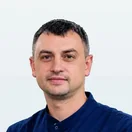
This page was prepared by Oleksandr Kaliuzhnyi — physical therapist, in practice since 2012.
Updated:
Book the way that suits you
We answer during working hours. If we miss your call, we'll call you back.
Request received
We will call you back during working hours to arrange a convenient time for your visit.
Request a call back
Leave your contact details — we'll call you back and arrange a time.