
Stroke rehabilitation in Zaporizhzhia
Rehab Place is an outpatient physical therapy office in Zaporizhzhia, Ukraine. The person lives at home and comes in for sessions: one-on-one work on movement, balance and everyday skills after a stroke, led by a physical therapist in practice since 2012. The first consultation takes about 60 minutes — conversation, examination, testing and a working plan.
This page is usually read by a family member rather than by the person who had the stroke, and often from another country. So the answers below are written for you: when sessions can start, how long recovery takes, what the family does between sessions, and where our work ends and a doctor's begins.
The information on this page does not replace a doctor's consultation. The decision about what physical load is safe after a stroke is made by the treating doctor.
In short: when to start, how long it takes, what to do at home
When can sessions start?
Sessions start once the treating doctor has cleared the person for physical load — usually not long after the condition has stabilised. The timing is the doctor's call, not ours. More in "When to start".
How long does recovery take?
The most noticeable changes usually happen in the first three to six months, but movement, balance and everyday skills can be worked on later as well. Nobody can tell you, without seeing the person, how long it will take in their case. More in "How long recovery takes".
What does the family do at home?
Short daily repetitions do more than rare long sessions. We show the family how to assist safely and what the home tasks are during the session itself — hands-on, not in writing. More in "The family's role".
What we work with after a stroke
- restoring movement and balance after a stroke;
- weakness of the arm or leg: support, controlled movement, gradual return of function;
- walking — stability, stepping, stairs, moving safely around the home and outside;
- self-care skills: sitting up and standing, dressing, eating, washing.
How long recovery takes
"How long will this take?" is the first question families ask. The honest answer: there is no single timeline, but there is a widely used framework of periods that specialists work with.
| Period | Approximate timing | What usually happens | What the physical therapist does |
|---|---|---|---|
| Acute | first weeks | the condition is stabilised in hospital | positioning and first movements, as directed by the hospital |
| Early recovery | up to ~6 months | the brain reorganises most actively | the bulk of the sessions, fastest progress |
| Late recovery | ~6–12 months | the pace slows, skills consolidate | walking, balance, everyday tasks |
| Long-term | after one year | changes are slower, but still possible | maintaining function, working towards new specific goals |
This framework is a way to understand the process, not a forecast. The pace depends on the severity of the stroke, age, other health conditions and how consistently the person trains — at home as well as at the office. No responsible specialist will name a timeline for an individual sight unseen, and if someone quotes you the month when "everything will come back", that is a reason for caution rather than relief.
One more thing worth knowing in advance: progress is rarely even. Weeks of visible change alternate with weeks when nothing seems to move. That is a normal part of the work, not a reason to stop.
A fuller breakdown of the periods, what sets the pace and how to measure progress is in the article how long recovery takes: stages and markers.
When to start
Families usually phrase this question as: "Are we already too late?" Almost always, the answer is no.
The sequence after discharge is straightforward. First, the treating doctor or neurologist clears the person for physical load — that decision is theirs, and we will not name a day or a week when it is "time". Then comes the consultation and testing at the office: we look at what the person can do alone, what they can do with support, and where the safety limit currently sits. After that we build the programme and start working.
The brain reorganises most actively in the early period, so there is no reason to delay without cause. But if you are getting in touch six months or a year later, it does not mean the time is lost or that you did something wrong. Balance, confident walking and using the affected hand in daily life all respond to training in the long-term period too — the goals are simply different and the pace is calmer.
What happens in hospital, where to go after discharge and why the pause between stages costs the most — when to start: the order of steps after discharge.
The family's role: what happens at home
Recovery after a stroke does not fit into the hours spent at the office — most of the repetition happens at home. That is why teaching you is a separate part of our work. Relatives join a session, see the technique in practice and leave with clear instructions, so the work continues every day rather than twice a week.
Worth doing:
- short daily repetitions matter more than rare long sessions;
- protect independence: better to let the person do something slowly themselves than to do it for them;
- remove trip hazards — thresholds, loose rugs, cables; put a stable support where the person stands up every day;
- assist with standing and walking exactly the way we showed you in the session: this technique cannot be learned from text or video, it is taught hands-on.
Best avoided:
- pulling on the affected arm — the shoulder is vulnerable after a stroke;
- rushing or hurrying the person: haste adds falls, not speed;
- pushing through pain.
If bringing the person to the office is not possible at this stage, ask about a home visit — this is considered case by case, depending on the person's condition and the schedule.
Supporting safely, shoulder injury, fall risk and the signs of overload are covered separately: how to make movement at home safe.
How the sessions go
We start with an assessment: strength, range of motion, balance and what the person can already do on their own. This sets the starting level of the programme.
Each session is built from short, clear tasks close to real life: shifting weight onto the weak leg, holding balance, standing up with support, taking a step. We repeat each task as many times as it takes to stick, then gradually raise the difficulty — less support, more independence.
The programme is reviewed regularly: once a skill is consolidated, we move to the next goal, and if something is not working, we change the approach rather than force it.
When you need a doctor, not a physical therapist
A physical therapist is not a physician, and part of what follows a stroke sits outside this scope. We say so plainly so that you do not lose time looking in the wrong place:
- diagnosis, stroke type, medication, blood pressure management — the treating doctor and neurologist;
- speech and swallowing — a speech and language therapist; we can point you towards one if needed;
- low mood, anxiety, depression after a stroke — a psychologist;
- day-to-day care for someone who cannot yet get up (hygiene, feeding, pressure sore prevention) — a home nursing service; our work is movement and safe transfers.
Red flag. If new symptoms appear suddenly — the face drops on one side, speech becomes unclear, an arm or leg goes weak — this is not a reason to come to a session. It is a reason to call emergency medical services immediately: 103 in Ukraine.
Our part of the work is movement, balance and independence in daily life. We are honest about the boundaries so that you look for the rest of the help where it actually is.
Outpatient office, hospital ward or residential care
In Ukraine, as elsewhere, the word "rehabilitation" covers at least three different things. Here is how they differ, so you can tell which one you are actually looking for.
An inpatient rehabilitation ward — when the person still cannot travel, or when a daily programme under medical supervision is needed. Zaporizhzhia city hospitals have such departments. Part of this can be obtained free of charge under Ukraine's programme of medical guarantees (NHSU) — the family doctor or treating doctor issues the referral. It is worth asking about this before paying for anything privately.
A residential care home — when the family's main need is round-the-clock care and supervision rather than training a specific function. That is a different type of service and not one we provide.
An outpatient physical therapy office — that is us. The person has been discharged, lives at home, and needs individual one-on-one sessions plus practical training for the family. You come in for the session; the rest of the time the person is at home, in their own environment, practising the things that actually matter in their daily life.
If you have not decided yet: ask the treating doctor about a referral to an inpatient rehabilitation ward, and if the person has already been discharged home, book a consultation with us. We do not need you to choose an outpatient office at any cost. We need you to choose the format that matches the person's condition right now. General information about rehabilitation in Ukraine is published by the Ministry of Health of Ukraine.
Arranging this from abroad
A large share of the people who read this page live outside Ukraine and are organising help for a parent or grandparent in Zaporizhzhia. A few practical points.
The person needs to be in Zaporizhzhia or able to travel there. Sessions are hands-on: assessment, assisted movement, balance work and safe transfers cannot be delivered over video, and we do not offer remote programmes. If your relative is in another city or country, look for a physical therapist locally — we would rather say that than take a booking that cannot help.
You can arrange the booking yourself. Call or write to +380 97 824 48 01 — the same number works on Telegram and Viber, and there is Instagram Direct (@rehabplace). We work Monday to Friday, 09:00–19:00 Kyiv time; Saturday is by prior arrangement and Sunday is closed — allow for the time difference when you call. If nobody picks up, we call back.
Sessions themselves are conducted in Ukrainian or Russian, which is what the person attending will need. We answer in English as well, so you can arrange the scheduling and the practical details with us directly.
Someone locally should come along. Part of every session is teaching whoever will be with the person between visits — a spouse, a neighbour, a carer the family has hired. If you are abroad, decide in advance who that person is, because the home repetitions are where most of the work happens.
Ask about payment arrangements when you book. Prices are set in Ukrainian hryvnia (see below); how a relative abroad settles them is worth agreeing on by phone in advance rather than on the day.
Your first visit
The first meeting takes about 60 minutes: conversation and history, examination and testing, a recovery plan and the first exercises. Bring comfortable clothes, a change of shoes and any medical documents — discharge summaries, scans, doctors' reports. Having a family member come along is not just helpful, it is preferable: part of the session is training the family.
Address: 28 Pavlokichkaska Street, Zavodskyi district, Zaporizhzhia, Ukraine — address and directions.
Accessibility
The office is on the ground floor — no stairs inside, no lift needed. There is a ramp at the entrance to the Zavodskyi Palace of Culture building, and parking next to it. Doorways are full width, with no narrow points.
Please know this before you travel: the toilet in the building is not adapted for visitors with reduced mobility. Factor that into how you plan the visit.
Cost and booking
The first consultation costs UAH 300 — about 60 minutes of conversation, examination, testing and a working plan. Serving military personnel and veterans get 30% off the consultation and sessions: UAH 210 instead of 300. Prices are quoted in Ukrainian hryvnia and are not tied to any foreign currency.
The cost and frequency of further sessions are agreed after the assessment, because they depend on the person's condition, stamina and goals — the reference figures are on the session costs page.
To book, call +380 97 824 48 01. A short description of what happened and what the person can currently do unaided is enough for us to find a suitable time.
Opening hours: Mon–Fri 09:00–19:00. Saturday by prior arrangement. Sunday closed.
See also: physical therapy (exercise therapy), therapeutic massage, recovery after injuries and surgery, session costs.
Questions & answers
When should rehabilitation start after a stroke?
Sessions begin once the treating doctor has cleared the person for physical load — usually not long after the condition has stabilised. A late start still makes sense: movement and independence can be trained a year after a stroke as well. More in When to start.
Is full recovery possible?
The speed and extent of recovery are individual: they depend on the severity of the stroke, age, other conditions and how regularly you train, so honest guarantees are impossible. Our job is to bring back concrete skills step by step — sitting up, standing, walking, dressing, using the hand — and track progress at every stage.
How long are the sessions?
The first consultation takes about 60 minutes: conversation, examination, testing and a working plan. The length and frequency of further sessions are set individually — they depend on the person's condition and stamina, since fatigue comes faster after a stroke. Every session is one-on-one with the physical therapist.
Are home exercises necessary?
Yes, homework is an essential part of recovery. A few sessions a week at the office are not enough: the brain needs daily repetition to consolidate a new movement. We give simple tasks for home, go through them during the session and teach family members how to help correctly and safely between visits.
What should family members do?
Come to a session together with your relative — we will show you how to assist with standing and walking, how to do the home exercises and what to avoid. Above all, support independence: it is better to let the person do something slowly themselves than to do it for them. Call us with specific questions. More in The family's role.
The stroke was over a year ago. Is training still worth it?
Yes. The most visible progress usually comes in the first months, but movement, balance and everyday skills can be trained in the late period too. We assess the current condition, set realistic goals and build the programme around them — coordinating it with your doctor when needed.
We cannot bring the person to the office yet. Do you visit at home?
The main format is sessions at the office at 28 Pavlokichkaska Street. If bringing the person in is not possible yet, a home visit is considered case by case — ask about it when you call. Either way, part of the programme is carried out at home, so we go through the exercises and the assisting technique with the family.
How is your office different from a rehabilitation centre or a care home?
We are an outpatient physical therapy office: the person lives at home and comes in for sessions rather than moving into a facility. Sessions are one-on-one with the same physical therapist throughout, and part of every session is training the family. If round-the-clock supervision or a daily programme under medical supervision is what is needed, another format is the honest choice — see Outpatient office, hospital ward or residential care.
The information on this page does not replace a doctor's consultation. For questions about diagnosis, imaging, medication and what load is safe for you, speak to your treating doctor.
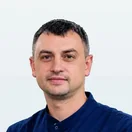
This page was prepared by Oleksandr Kaliuzhnyi — physical therapist, in practice since 2012.
Updated:
Book the way that suits you
We answer during working hours. If we miss your call, we'll call you back.
Request received
We will call you back during working hours to arrange a convenient time for your visit.
Request a call back
Leave your contact details — we'll call you back and arrange a time.