
Physical therapy & therapeutic exercise in Zaporizhzhia
Rehab Place is an outpatient physical therapy office in Zaporizhzhia, Ukraine, at 28 Pavlokichkaska Street in the Zavodskyi district. Sessions are led one-on-one by Oleksandr Kaliuzhnyi, a physical therapist in practice since 2012. The first consultation takes about 60 minutes: conversation, examination, testing and a working plan. It costs UAH 300; serving military personnel and veterans get 30% off the consultation and sessions: UAH 210 instead of 300.
This is the main page about physical therapy on the site: what it actually is, how it differs from what Ukrainians call "LFK", why "physical therapist" and "physiotherapist" mean different things in Ukraine, when sessions make sense, whether a doctor's referral is needed, and how to choose a specialist. At the end — every direction of work, each with its own page.
The information on this page does not replace a doctor's consultation. A physical therapist does not diagnose and does not prescribe medication.
In short: three answers if you are in a hurry
What is physical therapy?
Restoring movement through graded exercise selected for one person's condition and goal — work you do yourself, under supervision. More below.
Do I need a doctor's referral?
Not to book. But there are situations where a doctor should come first, and we say plainly which ones. More below.
How much is the first visit?
300 UAH, about 60 minutes. Serving military personnel and veterans get 30% off the consultation and sessions: UAH 210 instead of 300. More below.
What physical therapy is
Physical therapy (therapeutic exercise) is the restoration of movement through dosed physical exercises that a specialist selects for a person's specific condition and goal. Put simply, it is training where the target is not athletic performance but everyday life: walking without fatigue, climbing stairs, carrying bags, playing with your children. The therapist identifies which movements are missing and brings them back, step by step, with safe, graded load.
The key word is graded. A body recovering from illness, a cast or surgery responds to load differently from a healthy one: what is a warm-up for one person is already too much for another. The therapist's job is to find the line where load is still useful, then move it forward week by week.
The second feature is a concrete goal. Physical therapy does not work on an abstract "strengthen your back" — it works on what a person cannot do today and wants to do in a month: climb to the fourth floor without stopping, carry the shopping home, get dressed unaided, drive again. That goal, not the name of a diagnosis, decides what goes into the programme.
What physical therapy is not
- Not a passive procedure. Nobody "does" recovery to you: you do the work, while the therapist sets the load, supports you and watches your technique.
- Not a generic "back routine". Two people with identical wording in a discharge summary can end up with different programmes, because their starting points and goals differ.
- Not a substitute for medical care. This office is not a medical facility and a physical therapist is not a doctor — see the boundaries below.
Physical therapy and "LFK" — the same thing?
If you are arranging care in Ukraine, you will meet the abbreviation LFK (лікувальна фізкультура, "therapeutic physical culture") in discharge summaries and doctors' notes. In everyday speech it means physical therapy; in how the work is organised, there is a difference worth knowing.
| "LFK" as traditionally delivered | Physical therapy | |
|---|---|---|
| Who leads it | an instructor following a prescribed routine | a physical therapist who assesses the person and builds the programme |
| Format | often a group, one shared routine | one-on-one, a programme for one person |
| What it is built around | a set of exercises for a body region | a concrete functional goal: stand up, walk, lift an arm |
| The person's role | performs the routine | learns to manage load and works at home between sessions |
| What happens next | one routine for the whole course | the programme changes as soon as the condition changes |
Is "LFK" then an outdated word to avoid? No — it is what people search for in Zaporizhzhia and what doctors write in referrals, which is why we keep it on the site. If someone has been told to do LFK, this is the right place: the difference is not the label but that the programme is written for the person, not for the diagnosis.
Physical therapist, physiotherapist, "rehabilitologist": who does what
This is where English-speaking readers are most often misled, and the confusion costs people time and money.
In the UK a physiotherapist and in the US a physical therapist are the same profession: a movement specialist. In Ukraine they are not the same word. Here фізіотерапевт is a medical doctor who prescribes equipment-based modalities — electrotherapy, magnetotherapy, ultrasound, heat — while the movement specialist is фізичний терапевт, a physical therapist. A relative booking "physiotherapy" in Ukraine and expecting exercise-based rehabilitation may end up with electrotherapy instead.
| Who | What they do | A doctor? |
|---|---|---|
| Physical therapist (фізичний терапевт) | movement, exercise, restoring function and independence | no |
| Physiotherapist (фізіотерапевт, Ukrainian usage) | equipment-based modalities: electro-, magneto-, ultrasound, heat therapy | yes |
| LFK doctor (лікар ЛФК) | prescribes therapeutic exercise and sets the load regime | yes |
| Massage therapist | works manually with soft tissue | no |
| "Rehabilitologist" | an informal umbrella word; any of the above may be behind it | depends |
What follows practically. If electrophoresis, magnet therapy, ultrasound or heat has been prescribed, that is a physiotherapist's work — this office does not provide equipment-based modalities. If the aim is to restore movement, strength, balance and daily independence, that is a physical therapist's work. The two often run in parallel rather than competing.
One more thing worth knowing: a physical therapist does not diagnose, does not start or stop medication, and does not read scans in a doctor's place. He works with how a person moves now, and how to widen that range safely.
When physical therapy helps
The most common reasons people come to a physical therapist in Zaporizhzhia:
- Muscles have weakened after illness, surgery, a cast or a long period in bed, and ordinary tasks feel hard.
- A joint will not move fully — an arm that won't lift, a knee that won't bend, restricted range.
- Fatigue comes quickly from walks, stairs, housework.
- Balance is unreliable, walking feels unsafe, there is a fear of falling.
- Pain that has lasted for weeks — back, neck, shoulder, knee — returning after every effort.
- A return to a previous activity level after illness or surgery, without overloading at the start.
- Prevention — keeping strength and mobility so the problem does not return.
What all of these have in common: the person could do something before and cannot now. That gap is what the work addresses. If there is no complaint and the goal is general fitness, a gym and a trainer are the honest answer.
Do you need a doctor's referral
Formally, no — you can book a consultation directly. At the first meeting the therapist examines the person and says plainly whether sessions are appropriate or whether further medical assessment should come first. There are, however, situations where starting with a doctor is the sensible order:
- a fresh injury that has not been imaged — the damage has to be identified first;
- the first weeks after surgery — the load regime is set by the operating surgeon, and we work inside his limits;
- pain of unclear origin that appeared without effort and does not change with position;
- after a stroke or another acute neurological event — clearance comes from the treating doctor;
- children — where an orthopaedist has given a diagnosis, we build on that assessment.
Bring any recent discharge summaries, scans or reports: they save time and make the programme more precise. In complex cases we coordinate with the person's doctor rather than working around them — a referral is not an entry ticket here, it is a source of information, and the more of it there is, the safer the start.
When you need a doctor, not a physical therapist
A physical therapist is not a doctor, and part of what people ask about lies outside his competence. We say so plainly, so that you look for help where it actually is:
- diagnosis, medication, scans, lab tests, sick notes — a family doctor or a relevant specialist;
- equipment-based modalities (electro-, magneto-, ultrasound, heat therapy) — a physiotherapist (a doctor, in Ukrainian usage);
- questions about surgery — whether it is needed, when, what follows — the operating surgeon;
- speech and swallowing — a speech and language therapist;
- low mood, anxiety, disturbed sleep — a psychologist or a doctor;
- caring for someone who cannot get up (hygiene, feeding, pressure-sore prevention) — a nursing or home-care service; our work is movement and safe transfers, not nursing care.
Red flags mean medical help, not a session. In Ukraine, call emergency services on 103 if a face suddenly droops, speech becomes slurred, or an arm or leg abruptly weakens; if there is severe chest pain; if back pain is followed by numbness in the groin area or difficulty passing urine; if back pain comes with a high fever; if after a fall or blow a limb is deformed or cannot bear weight. These are not conditions to exercise through — they are medical emergencies, and delay is dangerous.
General information about rehabilitation and the state medical guarantee programme in Ukraine is published by the Ministry of Health and the National Health Service of Ukraine; ask the treating doctor which services are available without charge.
Five directions of work
Physical therapy is the method. Below are the situations we apply it to — each with its own page covering how sessions run in that case and what to expect.
After a stroke and other neurological conditions
Movement, balance and everyday skills: shifting weight onto the weaker leg, standing up with support, taking a step, moving safely around a flat. A distinct part of each session is teaching the family, because most repetitions happen at home. Clearance for physical load comes from the treating doctor. → Stroke rehabilitation
After injuries and surgery
Restoring range of motion and strength after fractures, ligament ruptures, joint replacement or prolonged immobilisation, inside the limits set by the operating doctor. This also covers work after amputation — including preparing the residual limb for a prosthesis. → Injury & surgery recovery
Military personnel and veterans
Restoring motor function after wounds, blast injuries, surgery and long hospital stays, including amputations and preparing the residual limb for a prosthesis. Serving military personnel and veterans get 30% off the consultation and sessions: UAH 210 instead of 300. → Military & veteran rehabilitation
Children: scoliosis and posture
Sessions for school-age children and teenagers: trunk strength, tolerance of static load, and the habit of holding the back well without being reminded. Where an orthopaedist has given an assessment, we build on it. → Scoliosis & posture in children, posture in schoolchildren
Back, neck and joint pain
The most common reason people get in touch. We work out which movements provoke the pain and which ease it, and build load around that. → Back, neck & joint pain
Within this direction we use three supporting methods, each with its own page:
- Massage — given by the office's massage therapist, Alona Kaliuzhna: work on muscles and soft tissue that prepares them for movement and eases tension, but does not replace exercise.
- Manual techniques — soft work with fascia and joint mobilisation within the physiological range. We do not perform spinal manipulation: that is a doctor's scope.
- Kinesio taping — elastic tape supporting a recovering area. Tape on its own restores nothing; it works alongside the sessions.
The full list is on the services page.
How to choose a physical therapist
The profession is comparatively young, so there are fewer reputational landmarks than with doctors. Seven questions worth asking any specialist, wherever you go — a working checklist, not a list of our advantages.
- Will there be an examination before the first session? A programme offered "by diagnosis", without watching how the person moves, is a bad sign.
- Are sessions one-on-one with the same specialist? Whoever saw the starting point notices changes a new person would miss.
- What is the concrete goal? A goal is an action — "reach the shelf", "walk a block without stopping". "Strengthen the back" is not one.
- Will there be a home programme? Two or three hours a week in an office do not replace short daily practice.
- What does the specialist say about the limits of their competence? Someone who takes on everything, from diagnosis to emotional support, should worry you more than someone who says "that is not my field".
- Are promises or timelines being offered? A conscientious specialist does not guarantee recovery, quote percentages, or name the month when "it will all be fine". Treat those as a warning, not good news.
- Will the specialist coordinate with the person's doctor? Readiness to write or call shows someone working inside the system rather than beside it.
About our therapist's experience and approach: our therapist.
Arranging sessions from abroad
Many people reading this page in English are organising care for a relative in Zaporizhzhia from another country. Write or call +380 97 824 48 01 — the number works for Telegram and Viber, which is easier across time zones than a call. Messages are answered during working hours, Ukrainian time (UTC+3 in summer, UTC+2 in winter). Sessions are conducted in Ukrainian and Russian; correspondence in English is handled in writing, and sending discharge summaries and scans as files in advance helps.
The format is outpatient: the person lives at home and comes to the office at 28 Pavlokichkaska Street. If bringing them in is not currently possible, a home visit is considered case by case — ask, rather than assuming it is a standing service. Payment is in Ukrainian hryvnia, in person.
How sessions work
We start with an examination: strength, range of motion, balance and how you respond to load. Based on the results, we build a programme — a specific set of exercises for your goal, not a generic "back routine" or "knee routine".
Every session is one-on-one and supervised by the physical therapist: he watches your technique, doses the load and supports you where a movement is still difficult. As your condition changes, the programme is revised — exercises are progressed or replaced.
Between visits you work on your own: after each session you get homework with clear instructions on how and how much to practice. That way recovery doesn't pause between appointments.
If someone at home needs help with movement — supporting, transferring, standing up — that is covered separately: safe movement at home after a stroke.
Your first visit
It takes about 60 minutes: a conversation about your condition and history, examination and testing, a recovery plan and your first exercises. Bring comfortable clothes, a change of shoes and any medical documents you have — scans, discharge summaries, doctors' reports.
Address: 28 Pavlokichkaska Street, Zavodskyi district, Zaporizhzhia — how to get to the office.
Accessibility
The office is on the ground floor — no stairs inside, no lift needed. There is a ramp at the entrance to the Zavodskyi Palace of Culture building, and parking next to it. Doorways are full width, with no narrow points.
Worth knowing before you travel: the toilet in the building is not adapted for people with reduced mobility — please factor that into planning a visit.
Cost and booking
The first consultation costs 300 UAH — about 60 minutes: conversation, examination, testing and a working plan. Serving military personnel and veterans get 30% off the consultation and sessions: UAH 210 instead of 300.
The cost and frequency of further sessions are set after the examination, depending on condition, stamina and goals — reference points are on the prices page.
To book, call +380 97 824 48 01. A short description of what is wrong and what is currently difficult is enough to start.
Opening hours: Monday to Friday, 09:00–19:00. Saturday by prior arrangement. Closed Sunday.
See also: stroke rehabilitation, injury & surgery recovery, military & veteran rehabilitation, back, neck & joint pain, scoliosis & posture in children, therapeutic massage, manual techniques, kinesio taping, our therapist, back pain: who to see, prices, contacts.
Questions & answers
What is the difference between a physical therapist and a physiotherapist?
In the UK and the US the two words mean the same movement specialist. In Ukraine they do not. Here a physiotherapist is a medical doctor who prescribes equipment-based modalities — electrotherapy, magnetotherapy, ultrasound, heat. A physical therapist is not a doctor and works with movement: exercise, strength, mobility, balance, daily independence. This office provides the second, not the first. More in the section on terminology.
Is LFK the same as physical therapy?
In substance yes — both restore movement through exercise. The difference is organisational: LFK as traditionally delivered is a doctor-prescribed routine, often performed in a group, while physical therapy is an individual programme built after the therapist's own examination and revised as the condition changes. If someone has been told to do LFK, this is the right place. More in the section on LFK.
How is therapeutic exercise different from regular fitness training?
The goal is different: fitness trains a healthy body, while therapeutic exercise restores lost function — strength, mobility, endurance. A physical therapist selects every exercise around your diagnosis and limitations, the load is carefully dosed, and technique is supervised at each session. That is why it is appropriate even when regular workouts are still unsafe.
Do I need a doctor's referral to start?
No, a referral is not required — you can book directly. At the first consultation the therapist will examine you and tell you whether exercise sessions make sense in your case. Bring any recent scans or discharge summaries if you have them. In more complex situations, such as shortly after surgery, we coordinate the programme with your doctor. The situations where a doctor should come first are listed in the section on referrals.
How long is a session, and how long is the course?
The first consultation takes about 60 minutes. The length of further sessions and of the whole course depends on your condition: the diagnosis, how long the problem has existed and how your body responds to load. We outline a rough plan after the first examination and revise it as you go — recovery speed is individual.
What should I wear?
Comfortable clothes that don't restrict movement: a T-shirt, sweatpants or leggings. Bring a clean pair of stable shoes to change into — sneakers work best. You can change at the office. If we are working on a specific area, such as a knee or shoulder, clothes that leave it accessible — shorts or a short-sleeved T-shirt — make the examination easier.
Can I exercise if I'm in pain?
Yes — in most cases that is exactly what physical therapy is for: we work with pain rather than waiting for it to pass. The load is chosen so as not to provoke a flare-up. Always tell the therapist about sharp or unusual pain: we will adjust the programme and, if needed, advise you to see a doctor.
Will I get homework between sessions?
Yes. After each session you get a few exercises to do on your own, with clear instructions on how many times and exactly how to do them. Home practice reinforces what we build in the office and makes sessions more effective. Difficulty increases gradually, and the therapist checks your technique at the next visit.
Does the therapist come to the person's home?
The main format is sessions at the office at 28 Pavlokichkaska Street. If bringing the person in is not currently possible, a home visit is considered case by case — please ask when you call. In any case part of the programme is done at home, so we go through the exercises and safe-support technique with whoever is helping.
Is there a discount for military personnel and veterans?
Yes — 30% off the consultation and sessions: UAH 210 instead of 300. It also applies to sessions in the military and veteran rehabilitation direction; ask by phone for details.
Is physical therapy suitable for older people?
Yes — and this is often where it matters most: after a long illness, a fall or surgery, strength and balance are lost quickly and come back slowly. The load is set from the person's current level rather than their age, starting with safe tasks: standing up from a chair, walking with support, moving confidently around the flat. If there are cardiac or other chronic conditions, mention them at the consultation and, where appropriate, clear the sessions with the treating doctor.
The information on this page does not replace a doctor's consultation. For questions about diagnosis, imaging, medication and what load is safe for you, speak to your treating doctor.
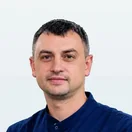
This page was prepared by Oleksandr Kaliuzhnyi — physical therapist, in practice since 2012.
Updated:
Book the way that suits you
We answer during working hours. If we miss your call, we'll call you back.
Request received
We will call you back during working hours to arrange a convenient time for your visit.
Request a call back
Leave your contact details — we'll call you back and arrange a time.