
Rehabilitation for wounded soldiers and veterans in Zaporizhzhia
Rehabilitation for service members of the Ukrainian Armed Forces and for veterans in Zaporizhzhia, Ukraine: consequences of combat injuries after hospital discharge, contractures, muscle weakness, pain, and getting back to ordinary daily activity. Sessions are led by a physical therapist practising since 2012, one-on-one, with a first consultation of about 60 minutes. A physical therapist is not a doctor: the work starts after the main medical treatment and runs alongside it, on movement, strength and endurance. Phone: +380 97 824 48 01.
This page covers both the free rehabilitation routes available in Ukraine and the paid sessions in our office — in that order, because for most people the free route is where to start.
If you are a foundation, an NGO or a volunteer arranging care
This is the audience most of this page is written for, so the practical part comes first.
How to arrange it — four steps:
- Write to us. Telegram or Viber at +380 97 824 48 01, or Instagram @rehabplace. Describe the person's condition briefly; attach the hospital discharge summary if you have it. Written enquiries in English are welcome.
- Get an honest assessment. We will tell you whether physical therapy can help in that specific case. If it cannot, we will say so and point you to who can. There is no charge for this and no obligation.
- Agree the schedule and scope — how many sessions, how often, roughly how long the programme will run, and the terms.
- Receive short progress updates — only with the patient's written consent. What has been done, what has changed, what comes next.
One principle we will not bend on: even when a foundation pays for the sessions, the decisions about the programme are made by the patient together with the therapist. A funder receives reporting, not a right to decide on someone's behalf.
Before you commit funds, three things worth knowing. First, part of what you may be about to fund is available free of charge in Ukraine — see free rehabilitation routes, and check them before paying for anything. Second, we are a small physical therapy office (one physical therapist and a massage therapist), not a clinic or an inpatient centre; the scope is deliberately narrow. Third, all prices are in Ukrainian hryvnia (UAH) and are not converted to any other currency.
What we work with
- consequences of combat injuries once the main hospital treatment is complete;
- contractures — a joint that has lost mobility after surgery or prolonged immobilisation;
- muscle weakness after long treatment and bed rest;
- pain in the injured area, in the back and joints;
- return to everyday load: walking, stairs, lifting, self-care;
- residual limb (stump) preparation for prosthetics and general reconditioning after amputation — in agreement with the doctor or prosthetist.
On amputations specifically, because it is the most frequent question. We do work on preparing a residual limb for prosthetics, but our part is strength, balance, endurance, posture and taking the overload off the sound limb — the groundwork without which a prosthesis does not work well. The prosthesis itself is made, fitted and aligned by a prosthetist. Walking on the finished prosthesis — balance, weight transfer, gait, stairs, uneven ground — is taught by the physical therapist. More on this: rehabilitation after amputation.
Rehabilitation after a combat injury is a different task from recovery after a household or sports injury. If you are looking for the latter: rehabilitation after injuries and surgery.
The recovery route, the first steps in outpatient work and the limits of what a therapist does — how physical therapy after a combat injury works.
If the condition you are asking about is not on this list, call — we will say honestly whether physical therapy is the right tool.
What a physical therapist does not do
A physical therapist is not a doctor: they do not prescribe treatment, they work on movement, strength and the return to ordinary loads. The boundaries, stated plainly:
- We do not treat, operate, prescribe medication, or give prognoses. Diagnosis and treatment are the doctor's responsibility. We start where the medical treatment has already been prescribed.
- We do not provide psychological rehabilitation and we do not work with PTSD. That is the field of psychologists and psychotherapists. Free psychological support for veterans and their families is provided through veteran spaces and state programmes — free rehabilitation routes.
- We do not make or fit prostheses. That is the prosthetist's work. We work in parallel, on movement, strength and balance.
- We do not work independently with the consequences of blast concussion or traumatic brain injury. That requires a team — a neurologist, a psychologist where needed, a rehabilitation specialist. Isolated physical components such as balance and load tolerance are addressed only in agreement with the treating physician.
- We do not replace medical supervision. Where there are medical restrictions, the programme is agreed with the doctor rather than worked around.
If your question falls outside this scope, we will say so on the first call and name who to approach instead. That is faster and more honest than booking a consultation "to take a look".
Free rehabilitation routes in Ukraine — check these first
Rehabilitation for Ukrainian service members and veterans can be free of charge, and in many cases that is the right place to start. For a foundation, this section is also a fast map of how the Ukrainian system is organised.
- The Medical Guarantees Programme of the NHSU. Rehabilitation care, both inpatient and outpatient, is covered by Ukraine's state Programme of Medical Guarantees and is provided free of charge at facilities contracted by the National Health Service of Ukraine. A referral from a treating or family doctor is required. Facility lists and conditions: nszu.gov.ua.
- Military hospitals and rehabilitation departments. The stage immediately after the main treatment; the referral comes from the treating physician. General guidance on where veterans should apply: moz.gov.ua (Ministry of Health of Ukraine).
- Veteran spaces in Zaporizhzhia. The city runs the "Blokpost" rehabilitation space and other municipal initiatives, free for veterans and their family members. Current addresses and schedules are published by the city council: zp.gov.ua.
- Ministry of Veterans Affairs programmes and veteran support officers. A veteran support officer in the local community helps with status, paperwork and available programmes: mva.gov.ua.
Programmes and their conditions change. This information is accurate as of 21 August 2026. Verify with the official sources or with the facility directly before applying.
When paid one-on-one sessions make sense — and when they do not
Paid sessions are a supplement to the state programmes, not a replacement for them. They make sense when:
- someone is waiting for a place in a state programme and does not want to lose months;
- a higher session frequency is needed than the programme provides;
- continuity matters — one therapist for the whole course, who remembers the case from day one;
- the person is in Zaporizhzhia for a short period, on leave or between stages of treatment, and the work has to be compressed into a few weeks.
They do not make sense when a free programme already covers the task. In that case we will say so directly and point you where to go.
A full breakdown of the routes, the documents and the order of steps is in the article free rehabilitation for service members: where to go.
Once the acute stage is behind and the body simply works differently than before service — returning to activity after service: work, daily life, sport, and why setbacks are normal.
How sessions work
Every session is one-on-one: only the patient and the therapist in the room. The programme is built on examination and testing, not on a template — even with similar injuries, two people have different limitations and different goals.
We work calmly and to the point. We do not ask about the circumstances of the injury beyond what the programme needs: what matters is how the body moves now and what the person wants to return to — service, work, or simply managing daily life without help.
How a course is structured
- Examination and testing. Strength, range of motion, balance, pain areas. Baseline measures are recorded, and progress is measured against them.
- A programme with gradually increasing load. The load grows from session to session, with exercises to do independently between visits.
- Programme review. As the condition changes, the plan changes: what was too hard at the start becomes the warm-up later on.
More on the format: how physical therapy sessions are structured.
Confidentiality and control over the session
- We do not publish photographs, stories or any personal data without written consent — not on Instagram, not in testimonials, not in reports.
- We do not pass information to third parties, including the foundation or volunteer paying for the sessions, without the patient's consent.
- A session can be stopped at any moment, without explanation. If pain appears during an exercise, we want to hear it immediately and the load is changed.
Scheduling is flexible: for someone in Zaporizhzhia only during leave or between stages of treatment, sessions are planned closer together. Saturdays are available by prior appointment.
First visit: what to bring and what to expect
The first consultation takes about 60 minutes: conversation and history, examination and testing, a recovery plan and the first exercises. The person leaves with specifics — what the state of the body is now, what can be worked on, and roughly how long the programme will take.
What to bring:
- comfortable clothes and a change of shoes;
- hospital or inpatient discharge summary;
- imaging and reports — X-ray, CT, MRI, ultrasound;
- the surgeon's or trauma specialist's report, if available;
- a list of prescribed medication;
- a combat participant (UBD) certificate or another document confirming status, for the discounted terms.
Missing documents are not a reason to postpone the visit — we work from how the body moves.
About referrals. No doctor's referral is needed for sessions with us; booking is by phone. A referral is required for free rehabilitation under the NHSU programme. These are two different routes and are easy to confuse.
Getting there, and whether the office is accessible
For someone on crutches, in a wheelchair or on a prosthesis, this has to be known before travelling, not on arrival. So here it is, as it is.
- Address: 28 Pavlokichkaska Street, Zavodskyi district, Zaporizhzhia — inside the Zavodskyi Palace of Culture building.
- Floor: ground floor. No internal stairs, no lift needed.
- Entrance: there is a ramp at the building entrance.
- Parking: available, and you can drive up close to the entrance.
- Doorways: no narrow points; wheelchairs and crutches pass through.
- Toilet: ⚠️ the toilet in the building is not wheelchair-accessible. Please factor this in when planning a visit, particularly a longer one.
- Companion: a family member or volunteer is welcome to come along.
If help is needed getting from the parking area to the office, call ahead on +380 97 824 48 01 and we will meet you.
Terms for active service members and veterans
30% off the consultation and sessions for active service members of the Ukrainian Armed Forces and for veterans. The first consultation is UAH 300; with the discount, UAH 210. That is the final figure, not a starting price. All prices are in Ukrainian hryvnia and are not converted to other currencies.
Who this applies to:
- active service members of the Ukrainian Armed Forces and other components of Ukraine's Defence Forces;
- war veterans and holders of combat participant (UBD) status;
- persons with a disability resulting from the war.
Proof of status: a UBD certificate, a war-related disability certificate, a unit-issued confirmation, or a military ID with the relevant entry. We do not copy or store these documents — showing them is enough.
How it works. Terms are fixed at the first consultation, after the examination, and apply both to individual sessions and to a full course. There is no fixed price list for a course on the site, and that is deliberate: the cost depends on the condition and on how long and how often someone trains. The terms for a specific case can be confirmed by phone in a minute, without a visit.
More on this: what the cost of sessions is made up of.
Who runs the sessions
Oleksandr Kaliuzhnyi — physical therapist, practising since 2012. He runs the Rehab Place office in Zaporizhzhia and conducts every session personally, one-on-one: recovery after injuries, surgery and stroke, work with pain, and rehabilitation for wounded service members and veterans.
The profession is often called "rehabilitologist" in everyday Ukrainian speech; the correct term is physical therapist — a specialist in movement recovery, not a physician. He does not diagnose and does not prescribe treatment.
Diplomas and certificates are shown on request at the office. Anyone arranging or funding care is welcome to ask about qualifications and approach directly.
How to get in touch
We answer during working hours. If we miss a call, we call back.
Opening hours:
- Mon–Fri: 09:00–19:00
- Sat: by prior appointment
- Sun: closed
Contact:
- Phone: +380 97 824 48 01
- Telegram — message us
- Viber — message us
- Instagram Direct — @rehabplace
- Call-back request form
Office: 28 Pavlokichkaska Street, Zaporizhzhia, Ukraine.
See also: rehabilitation after injuries and surgery, physical therapy, kinesio taping, therapeutic massage, prices.
Questions & answers
Can rehabilitation be obtained free of charge in Ukraine?
Yes. Rehabilitation is covered by the state Programme of Medical Guarantees — free of charge with a doctor's referral at NHSU-contracted facilities. Military hospitals and rehabilitation departments operate, and Zaporizhzhia has veteran spaces including "Blokpost". Our sessions are paid, with 30% off the consultation and sessions for service members and veterans. The free routes are listed above.
Is a doctor's referral required?
Not for sessions with us — booking is by phone or through the form on this site. A referral is required for free rehabilitation under the NHSU programme. Discharge summaries, imaging and doctors' reports help us build a more precise programme, so bring them if they exist.
Do you work with amputations?
Yes. We work on residual limb preparation for prosthetics and on general reconditioning: strength, balance, endurance, posture. The prosthesis itself is made and fitted by a prosthetist, while walking on the finished device is something we teach; the scope and pace of sessions are agreed with the prosthetist or the treating doctor so that physical therapy supports the main treatment.
Do you work with the consequences of blast concussion or with PTSD?
The psychological component is outside our scope — that is the work of a psychologist or psychotherapist. Isolated physical components after a concussion, such as balance, dizziness and load tolerance, are addressed only in agreement with the treating physician and as part of a team, not instead of one.
Can sessions run while hospital treatment is still ongoing?
Only with the treating physician's agreement. If they approve, we fit the schedule around the stages of treatment, including procedure days and discharge.
How much does it cost?
The first consultation is UAH 300; active service members and veterans get 30% off the consultation and sessions: UAH 210 instead of 300. The cost of a course depends on the condition and on the length and frequency of sessions, so it is set at the first consultation after the examination. Call +380 97 824 48 01.
Can a foundation or volunteer arrange sessions for someone else?
Yes. Message us on Telegram or Viber at +380 97 824 48 01 with a short description of the condition. We will say honestly whether physical therapy will help, agree a schedule, and — with the patient's written consent — send short progress updates. The programme decisions remain with the patient.
Can family members attend sessions?
Yes, if that is more comfortable: sessions are one-on-one and there are no strangers in the room. On request we show relatives how to support the person safely at home between sessions — spotting during exercises, dosing the load — and where not to do things for them.
A long time has passed since the injury. Is it still worth starting?
Yes, starting long after a wound or surgery is possible. At the consultation we examine, test strength and range of motion, and say honestly what can be worked on. Recovery speed is individual, but there is usually room to work even in long-standing cases.
The information on this page does not replace a doctor's consultation. For questions about diagnosis, imaging, medication and what load is safe for you, speak to your treating doctor.
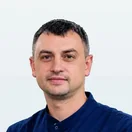
This page was prepared by Oleksandr Kaliuzhnyi — physical therapist, in practice since 2012.
Updated:
Book the way that suits you
We answer during working hours. If we miss your call, we'll call you back.
Request received
We will call you back during working hours to arrange a convenient time for your visit.
Request a call back
Leave your contact details — we'll call you back and arrange a time.