
Free rehabilitation for Ukrainian service members and veterans: where to go
Free rehabilitation for service members of the Ukrainian Armed Forces and for veterans does exist in Ukraine. The difficulty is almost never that help is unavailable — it is that the help sits in four or five places at once, run by different institutions, and nobody hands you a single list. The state funds rehabilitation through the medical guarantees programme, military hospitals run their own rehabilitation departments, and cities operate veteran spaces; in Zaporizhzhia there is a rehabilitation space for veterans and a network of Veteran Rooms across the districts.
This page is that single list: what each route is, who can use it, what documents you need, and where to go first. It is a reference article, not an advert. We are a private physical therapy practice in Zaporizhzhia and our sessions are paid — but if a free programme covers what you need, the sensible thing is to go there, not to us.
If you are abroad — arranging care for a relative, or funding it as a foundation or volunteer initiative — read the first four sections before you spend anything. Much of what gets paid for privately is already covered by the state programme.
The five routes, in short
The system, compressed:
- The medical guarantees programme, run by the National Health Service of Ukraine (NHSU) — inpatient and outpatient rehabilitation, free, on a doctor's referral. The main route for most people.
- Military hospitals and their rehabilitation departments — the stage immediately after primary treatment, on the treating physician's referral.
- Veteran spaces and municipal initiatives — in Zaporizhzhia, the "Blockpost" rehabilitation space and the Veteran Rooms in each city district.
- The veteran assistant (veteran support specialist) — not a service but a person, whose job is to walk you through the system and the paperwork.
- The Ukrainian Veterans Fund and civil society organisations — programmes that top up what the state covers.
These routes do not cancel each other out: a veteran can be in rehabilitation under the medical guarantees programme, getting legal advice at a veteran space and sorting out their status through a veteran assistant, all in the same month.
1. Rehabilitation under the NHSU medical guarantees programme
This is the widest free route, and the one to understand first. Rehabilitation care — inpatient and outpatient — is included in Ukraine's medical guarantees programme: a facility holding a contract with the National Health Service of Ukraine provides it free of charge, and the state pays the facility.
Who is eligible. The programme is not a veterans-only benefit; it works for any patient with a medical indication. For service members and veterans that is good news: you are entitled on general grounds, without your veteran status formalised first.
How it works in practice
- You need a referral. From the treating physician — the one who managed your case in hospital — or from the family doctor with whom you have signed a declaration. Without it the facility cannot admit you under the programme.
- The facility must hold an NHSU contract. Not every hospital or clinic does. The register of contracted facilities and the service packages are published on the official site: nszu.gov.ua.
- There is a contact centre. The NHSU runs a free line, 16-77, from landlines and mobiles alike. Operators take calls on weekdays 09:00–18:00 (until 16:45 on Fridays); outside those hours an automated assistant answers. They will tell you which facility near you provides the care you need and what the package includes.
- Waiting lists are real. In busy facilities, rehabilitation is not booked for tomorrow. Ask about waiting times on your first call, not after you have submitted paperwork.
General guidance for veterans seeking medical care is published by Ukraine's Ministry of Health: moz.gov.ua.
2. Military hospitals and rehabilitation departments
This is the route for the stage that follows primary treatment directly, while the person is still inside the military medical system. The referral to a specialist rehabilitation department is issued by the treating physician at the hospital; no separate application is needed.
One practical point that is missed constantly: ask about rehabilitation before discharge, not after. Once a patient has been discharged "for observation at place of residence", the route gets longer — you start again from the family doctor and a fresh referral. While still in hospital, ask directly: where will I be referred next, and what happens if there is no place?
If discharge has already happened, this is not a dead end — the route simply runs through the family doctor and the medical guarantees programme above.
3. Veteran spaces and municipal initiatives in Zaporizhzhia
The municipal level is the least known and the fastest: no medical referral is required, veteran status is enough.
The "Blockpost" rehabilitation space for veterans. A space in Zaporizhzhia where veterans, women veterans and their families receive integrated support free of charge — physical and psychological rehabilitation, legal advice, help with employment — plus a separate hub for the children of service members. Official information and contacts are published by the city council: Rehabilitation space for veterans begins operating (page in Ukrainian).
The Department for Veterans Policy of Zaporizhzhia City Council. 64 Poshtova Street, Zaporizhzhia — the entry point for municipal veteran programmes.
Veteran Rooms in the city districts
Veteran Rooms operate in every district of Zaporizhzhia. They are where documents for municipal veteran programmes are submitted, and the easiest place to ask a first question of an actual person. Addresses, per the city council:
- 16 Charivna Street
- 4b Lakhtinska Street
- 56 Amatorska Street
- 14 Vintera Boulevard
- 14 V. Zaitseva (Lermontova) Street
- 32 Chumachenka Street
- 64 Poshtova Street
Current addresses, hours and municipal programmes are maintained in the "I am a Veteran" section of the Zaporizhzhia City Council website (in Ukrainian).
4. The veteran assistant: a person who walks you through the system
A veteran support specialist — commonly called a "veteran assistant" — is not a medical service. It is guided navigation: establishing with you what status you hold, which programmes exist in your community, which documents you need and in what order.
If you do not know where to start, or an application has been refused and nobody explained why, this is the first person to see. Veteran assistants work within local authorities; find yours through your community or through Ukraine's Ministry of Veterans Affairs: mva.gov.ua.
Worth knowing separately: the state portal veteranpro.gov.ua — "Veteran PRO" — groups services by status (combat participant, person with a disability resulting from the war, family member of a fallen Defender) and by topic; "Health and recovery" covers treatment, prosthetics, rehabilitation centres and psychological support. For a reader abroad, it is the closest thing to an official index of what a veteran in Ukraine is entitled to.
5. The Ukrainian Veterans Fund and civil society
The Ukrainian Veterans Fund is an institution under the Ministry of Veterans Affairs and supports projects for veterans, rehabilitation among them: veteranfund.com.ua.
Alongside it, civil society organisations and charitable foundations either pay for rehabilitation in individual cases or run it themselves. This layer is less stable — programmes open and close with their funding — but it is often what closes the gaps the state route leaves.
What documents you will need
The exact list depends on the route and the facility, but a core set repeats almost everywhere. Assemble it once and everything afterwards moves faster.
- Passport or ID card, and the taxpayer number (RNOKPP / TIN).
- A document confirming status: the combat participant certificate (UBD), the certificate of a person with a disability resulting from the war, a certificate from the military unit, or a military ID with the corresponding entry.
- A referral from the treating or family doctor — the key document for the medical guarantees route.
- The hospital discharge summary — diagnosis, operations performed, recommendations.
- Imaging and reports: X-ray, CT, MRI, ultrasound.
- A surgeon's, trauma specialist's or neurologist's report, if there is one.
- The list of prescribed medication.
A practical note for families coordinating from abroad: photograph the whole set and keep it in one shared phone folder. Often the problem is not that a document does not exist — it is that it stayed at home in another city.
Where to go first: the order of steps
- If you are still in hospital — ask the treating physician about rehabilitation before discharge. Shortest path there is.
- If you have already been discharged — family doctor for a referral, then a facility with an NHSU contract. Calling 16-77 saves several days of searching.
- In parallel — the Veteran Room in your district, or a veteran space. No referral needed, and non-medical questions get answered in the same place: legal, social, employment.
- If status and paperwork are the obstacle — find the veteran assistant in your community. That is precisely their job.
- If the wait is long and the condition needs work now — only then look at paid sessions, and as a supplement rather than a replacement.
If a free programme covers what you need, go there
We will say this plainly, private practice or not. If a free programme covers what you need, go there. State rehabilitation under the medical guarantees programme, hospital rehabilitation departments and municipal veteran spaces are not the lesser option for people who cannot pay. They are the main route, and they often offer more than any single private practice can: a full team, equipment, a doctor supervising the case.
Paid one-to-one sessions make sense in narrower situations — when you are on a waiting list and do not want to lose months; when you need a higher session frequency than a programme provides; when you are in the city only briefly, on leave or between stages of treatment.
How that work is structured after a combat injury, and where physical therapy sits in the route — extra one-to-one sessions while you wait.
For reference: at our practice the first consultation costs 300 UAH, and serving members of the Ukrainian Armed Forces and veterans get 30% off the consultation and sessions: UAH 210 instead of 300. Sessions are led by Oleksandr Kaliuzhnyi, a physical therapist practising since 2012. A physical therapist is not a doctor: he does not diagnose and does not prescribe medication; the work is movement, strength and endurance, after primary treatment and alongside it. We do not provide psychological rehabilitation — that is a psychologist's field, and free psychological support for veterans and families is what the veteran spaces and state programmes above are there for.
More detail: rehabilitation for service members and veterans in Zaporizhzhia and how physical therapy sessions are structured. Enquiries in English are welcome: +380 97 824 48 01.
Questions and answers
Is rehabilitation for service members genuinely free in Ukraine?
Yes. Under the NHSU medical guarantees programme it is free at contracted facilities, on a referral from the treating or family doctor. Municipal veteran spaces are free too, and there no referral is needed — status is enough.
Is a referral required?
For the medical guarantees route, yes. For veteran spaces and Veteran Rooms, no. For paid sessions at a private practice, no referral either. These are separate routes and they are easy to confuse.
What if veteran status has not been formalised yet?
The programme is not tied to veteran status — it is provided on medical grounds. For the status itself, see the veteran support specialist in the relevant community.
How long is the wait?
There is no single figure: it depends on the facility, the region and the type of care. Ask on the first call rather than after applying. The 16-77 contact centre can name several facilities, which makes them comparable.
We are abroad and want to fund care for a relative. What should we check first?
Whether the case is already covered by the programme, and whether a referral has been issued. If it has, funding goes further on what the programme does not cover — travel, accommodation, or a higher session frequency.
How current this is. The information on this page was compiled from official Ukrainian sources and is current as of 24 August 2026. Lists of contracted facilities, package contents, eligibility conditions and procedures change. Before approaching any of them, confirm the current terms with the official sources — nszu.gov.ua, moz.gov.ua, mva.gov.ua, zp.gov.ua — or by phone with the facility or on the NHSU line 16-77. Most official pages are in Ukrainian.
Reference information; it does not replace a consultation with a doctor. Decisions about a rehabilitation route are made by the treating physician.
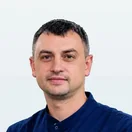
This page was prepared by Oleksandr Kaliuzhnyi — physical therapist, in practice since 2012.
Updated:
Book the way that suits you
We answer during working hours. If we miss your call, we'll call you back.
Request received
We will call you back during working hours to arrange a convenient time for your visit.
Request a call back
Leave your contact details — we'll call you back and arrange a time.